Back Row Detectives: What Rotherham’s School Outing Photos Can Still Tell Us
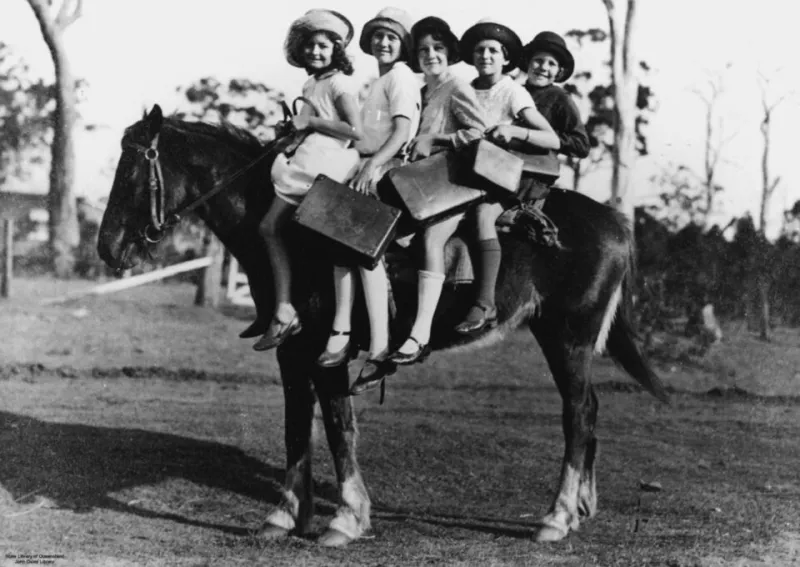
Photo: State Library of Queensland, Australia, No restrictions, via Wikimedia Commons
Somewhere in Rotherham’s local collections is a photograph of a class posed beside a charabanc. The girls are in summer dresses, the boys in shorts, and a teacher stands at the edge with a handbag and a look that says the coach is late. It is a familiar sort of image: a line of children, a strip of wall, a destination board just out of focus. But school outing photographs are among the most revealing records we have of ordinary childhood in the town. They show not only where children went, but what a rare day out felt like.
The outing that became a memory
School trips in the past were often less frequent and more formal than they are today. A Whitsun treat, a Sunday school outing, a works trip or an end-of-term charabanc run could be the only long journey some children made all year. Waggonettes and early coaches were hired for the day, packed lunches were carried in bags and boxes, and best clothes were worn because the outing was an occasion. The destination might have been a seaside town, a country park, a museum or a factory that had invited the children of its workers.
Oral histories from Rotherham families often mention the coach itself: the smell of leather and petrol, the scramble for back seats, singing on the way home and a bottle of pop shared between friends. The photographs rarely capture that noise and excitement. They catch the pause before the engine starts or the tired smiles afterwards. That is why they matter. They are not just records of places visited; they are records of anticipation.
Clues in the back row
Reading a school outing photograph is a bit like reading a map. Start with the background. A shop name, a factory chimney, a school badge, a wall or a bus destination can narrow down the date and place. Look at the clothing: shorts and sandals, blazers, caps, ribbons, hand-knitted jumpers and coats carried over arms all offer hints. Then look at the faces. The tallest children may be at the back, but the smallest are often at the front, squinting into the sun.
Many photographs have pencilled names on the reverse, but just as many have lost their captions. This is where local families and schools can help. A remembered teacher’s name, a street corner or a coach company can unlock a whole image. Rotherham Archives and Local Studies and Clifton Park Museum are good starting points for anyone who wants to look more closely at local photographic collections. Teachers comparing past and present journeys with pupils can use the same images to ask simple questions: What has changed? What has stayed the same? Who is missing from the frame?
From Whitsun treats to 2026 coach trips
A school trip in 2026 is likely to involve risk assessments, seat belts, named lunch bags and a careful itinerary. Museums, heritage sites and outdoor learning centres are popular destinations, and photographs are more likely to be taken on a phone than by a hired photographer. The paperwork is thicker and the journey is safer, but the core experience is not so different. Children still remember who they sat next to, what they ate and the moment they got away from the usual timetable.
What has changed is the scale of the ordinary. For earlier generations, a coach trip could be a first glimpse of a town beyond the pit village or the edge of the estate. For children in 2026, travel may be more familiar, but the school outing still carries a special charge. It is a day when the usual rules loosen slightly and the class becomes a small travelling community.
Help us fill in the missing captions
If you have a school outing photograph tucked in a drawer, take a second look. Check the back for pencil marks. Ask older relatives if they recognise a teacher, a uniform or a coach. If you can add a name, a date or a destination, share it with your local archive or with a community heritage project. These small pieces of information turn a mystery image into a usable piece of local history.
Rotherham Roots would also like to hear from schools and families who have compared old trip photographs with their own outings in 2026. The story of the school trip is not just about transport or destinations. It is about the day the ordinary routine stopped, the coach doors opened and a class stepped into a memory.