A Thousand Books and a Flask of Tea: The Van That Kept Rotherham Reading
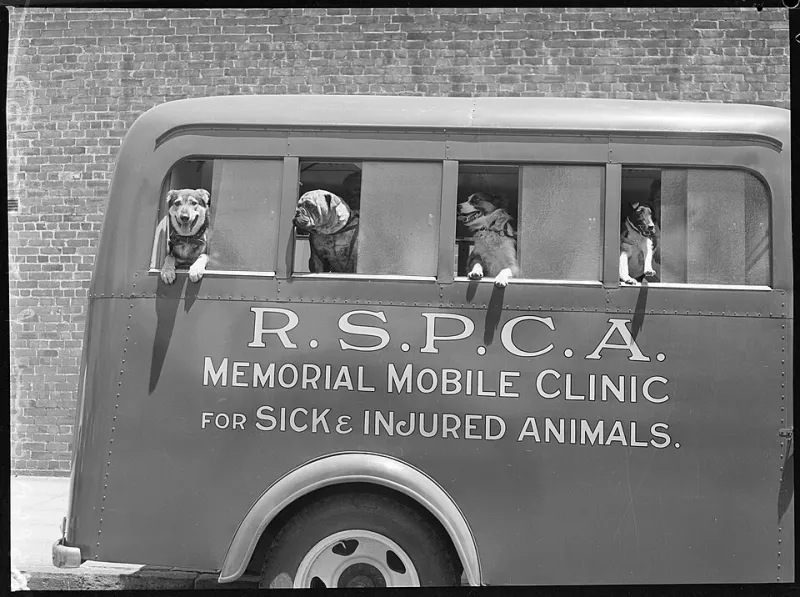
Photo: Ivan Ive, Public domain, via Wikimedia Commons
There is a particular sound that people of a certain age in Rotherham can still call to mind: the low chug of a diesel engine, the squeak of a handbrake, and the clunk of a side door being folded open. For thousands of families, that was the sound of the library arriving. Not a grand building with stone steps and a echoing reference room, but a van parked at the end of the street, shelved from floor to ceiling, with a queue already forming by the kerb.
The mobile library was never just a delivery service for books. It was a weekly or fortnightly appointment, a place to swap news, a quiet corner for a child to choose a picture book, and sometimes the only public service that came close to isolated farms and outlying estates. Its timetables were kept in kitchen drawers beside the guarantee slips and the meter key. Its staff knew which reader liked westerns, which mum needed board books for a toddler, and which gentleman would pretend he had only come out for a chat.
The timetable in the kitchen drawer
In the post-war decades, as new estates spread outwards from the town centre, the mobile library became a practical answer to a simple problem: how do you get books to people who live too far from a branch? The routes were planned with the care of a bus service. Villages and suburbs had their set days and hours — perhaps a Tuesday morning in one place, a Thursday afternoon in another — and the van would pull up outside a school, a pub, a chapel or a row of shops.
People remember the printed timetable as much as the van itself. It might be a flimsy leaflet, a card pinned to the noticeboard in the post office, or a line in the parish magazine. In an oral history recording, one resident recalled that her mother would write the mobile library day on the back of the shopping list so nobody forgot. Another remembered running home from school because the van was due at half past three and she wanted first pick of the return trolley.
For children, the timetable had a rhythm of its own. A visit from the van could break up a long afternoon, especially in the school holidays when the days stretched out and the weather was not always kind. For older readers, the arrival was a reason to put the kettle on early and stand at the gate with a coat over an arm, watching for the shape of the van turning into the road.
More than a borrowing service
Ask anyone who used a mobile library and the conversation rarely stays on books for long. The van was a social lifeline, particularly for people who found it difficult to get into town. Mothers with prams, older residents living alone, shift workers who could not reach a branch before closing — all of them found a use for a library that came to them.
The staff were part of the service. They were not just issuing books; they were noticing things. If a regular reader had not appeared for two visits, someone might ask a neighbour. If a request had been difficult to track down, the librarian would arrive with an apologetic smile and an alternative suggestion. The counter was narrow, the aisles were tight, and the conversation was often conducted over a stack of returned paperbacks.
There was a practical kindness in the way the van worked. Readers could reserve titles, return books from a branch, and ask for large print editions. In later years, talking books on cassette and then CD widened the service further, bringing stories to people whose eyesight had begun to fail. For a housebound reader, the fortnightly stop was not a luxury. It was a line to the world beyond the front room.
And for children, the van was a quiet classroom on wheels. School visits were often arranged so that a class could climb aboard in small groups, learn how a library was organised, and choose a book to take home. Teachers used the visits to talk about responsibility — returning things on time, keeping books dry, using a bookmark instead of folding a corner. Photographs of these visits often show a line of children in uniform, some grinning, some shy, clutching their choices as if they had been handed something precious.
What the photographs and forms can still tell us
Old photographs of mobile library visits are more revealing than they first appear. Look at the clothes, the parked cars, the shop fronts behind the van, and you can often date a picture within a few years. Look at the children’s faces and you can see the mixture of excitement and solemnity that comes with being trusted with a library book.
Then there are the paper traces. A timetable leaflet, a date stamp, a request card, a faded poster in a school logbook — these small items are gold dust for local historians. They can help map routes that have long since disappeared and show how the service changed over time. A route that once stopped outside a village hall may later have moved to a new housing estate. A Friday afternoon slot may have become a Thursday morning. These details matter because they show how the town grew and how public services tried to keep pace with it.
For schools and community groups, the mobile library is a ready-made local history project. Children can interview grandparents about the van, draw a map of their own imagined route, or compare an old timetable with a modern bus service. It is a way of learning about change, but also about continuity. The technology of borrowing may have shifted towards apps and reservations, yet the human reasons for reading remain the same: curiosity, comfort, escape and company.
Do you remember the van?
We would like to hear from readers who remember Rotherham’s mobile library vans. Which road did yours stop on? Was it outside a school, a shop, a pub or a row of terraced houses? What did the inside of the van look like? Did you have a favourite librarian, a favourite book, or a request that took weeks to arrive? Perhaps you have a photograph of the van parked up, or a timetable that has survived in a drawer.
Those memories are part of the town’s shared history. They sit alongside the school logbooks, the shop ledgers and the family photographs that tell us how ordinary people lived. If you have something to share, the local studies collection and community heritage groups are always glad to hear from you. Every memory adds another stop to the map.
Pictures, timetables and recollections can help younger generations understand something important: a library is not only a building or a van or a website. It is a relationship between a reader and a world of stories. The van has gone quiet on many routes, but the memories are still parked up, waiting to be borrowed.