Before the Shops Change Hands: Recording Rotherham's Streets While We Still Can
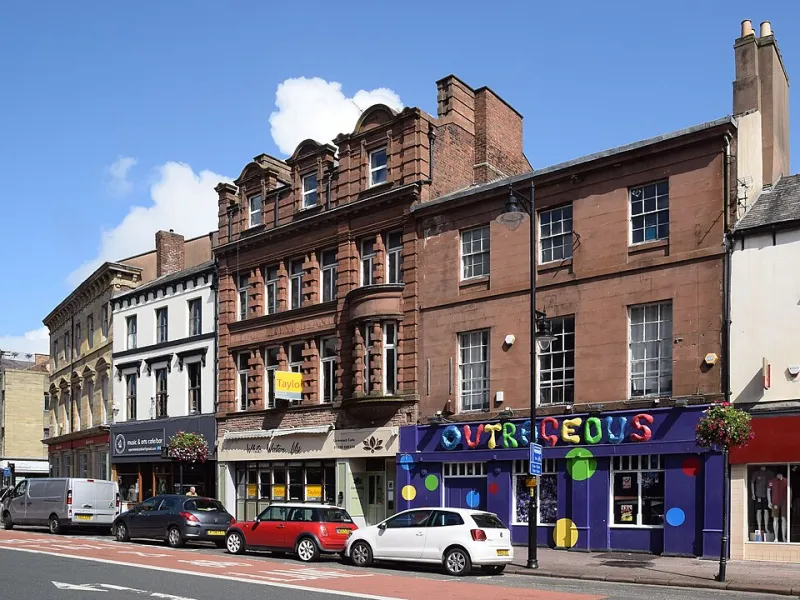
Photo: Bill Harrison , CC BY-SA 2.0, via Wikimedia Commons
There is a stage in the life of any neighbourhood when everyone can still name what used to be there, and then suddenly nobody can. The chip shop that became a nail bar, the pub that became flats, the wall that was knocked down to make a turning. Twenty years later, someone says 'wasn't there a shop on that corner?' and the room goes quiet.
That silence is the thing worth catching. Not the grand civic buildings — those have their own files and their own photographs — but the ordinary furniture of a street.
The everyday is always the first thing to go
Museums have understood this for a long time. It is the shopping list, the bus timetable, the mended coat and the school bag that tell you how a place actually ran. Yet in family collections and community memory, those are precisely the things we throw away first, because at the time they look like nothing.
The same is true of streets. The name of the man who ran the corner shop for thirty years is not in a history book. The fact that children from a particular road all walked to school along the back alley because the main road was considered too dangerous is not in any map.
And yet these details are the difference between a street that people feel they belong to and a set of postcodes.
We are not short of technology. We are short of asking.
In 2026 almost everybody has a recorder of some sort in their pocket. The barrier to collecting oral history is not equipment. It is the slightly awkward business of sitting down with a neighbour and saying, 'tell me what it was like here when you were young'.
Plenty of people will. What they usually need is permission to think the detail is worth saying out loud.
Six prompts that work almost every time
These are the questions I would start with, in this order, because each one opens the next:
- Draw me your walk to school. Not the route on a map — the real one. Which side of the road, which gate, who you called for on the way.
- What could you buy on your street within two minutes of your front door? Then: what did it sell that you can no longer buy anywhere?
- Who did everyone know? The shopkeeper, the neighbour who watched the street, the man with the van. Names first, stories later.
- What has been knocked down? And what was there before that?
- What has stayed exactly the same, and why? This question is underused. It explains what a place values.
- What would you tell a child in 2050 about this street? This one shifts people from recalling to selecting, which is where the good material lives.
Running something small, and doing it properly
A good project does not need funding or a committee. It needs about four people and a plan.
- Pick a small area. One street, one estate, one row of shops, one school catchment. Vague projects stall.
- Get a map printed — the largest scale you can find — and ask people to mark it up in pencil while they talk. The markings often become the archive.
- Agree permissions early. A simple one-page consent form saying how the recording will be used, who will look after it, and how someone can ask for it to be withdrawn is more than most amateur projects bother with, and it is the difference between a nice afternoon and something an archive can accept.
- Record in pairs. One asks, one takes notes on names and places. Rotherham place names and dialect terms are easy to mis-hear and hard to spell later.
- Keep the ordinary. Don't edit out the prices, the walking times, the weather, the boredom. Those are the details a historian fifty years from now will want.
Think about where it lands afterwards
A recording in a phone is not an archive. Before you start, decide where the material will end up. Rotherham Archives and Local Studies at Clifton Park Museum is the natural home for much of this; local libraries and community groups often hold their own collections; and a school may well want copies of anything that mentions its older buildings.
Whatever you do, label it. A file called 'recording 4' is a lost recording. A file called 'Jean W, 82, Maltby, remembering the shop on the corner, March 2026' is a source.
Why it matters now rather than later
Rotherham keeps changing, the way towns do. Some of that change is welcome, some of it is argued about, and most of it is simply lived through without anyone writing it down. The people who can describe the town before the last round of changes are in their seventies and eighties. The people who will be asked about 2026 are already here, walking the same streets.
So this is the case for 2026: don't wait for an anniversary, a funding bid or a proper project. Ask your nan what was on the corner. Ask the man over the road why he always walks the long way round. Put the map on the table on a Saturday morning and let someone draw their school route on it.
A street is an archive that is open only while the people who remember it are still willing to be asked.