The Empty Desk by the Door: Reading Rotherham’s School Logbooks for Snow, Harvest and Home
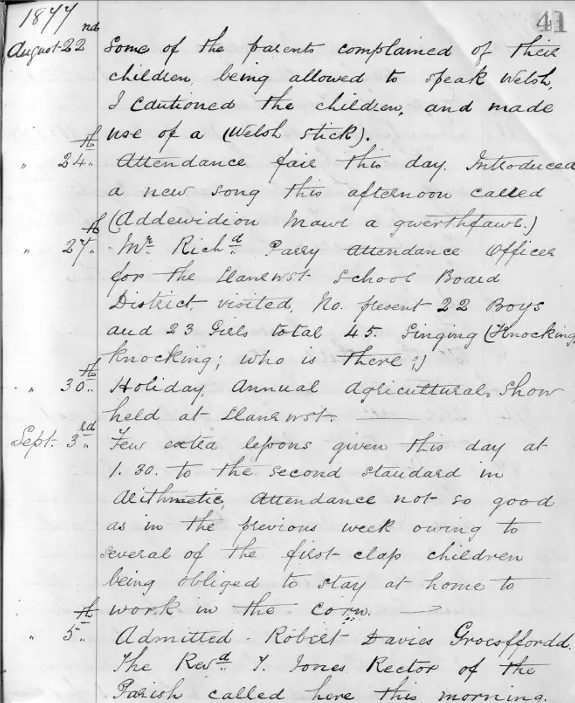
Photo: Unknown authorUnknown author, Public domain, via Wikimedia Commons
School logbooks are not the most glamorous records in the archive. They are usually bound volumes, filled with a headteacher’s handwriting and a mixture of routine notes and sudden remarks. But open one at random and you can find weather, illness, harvest work, transport problems and the everyday reasons why children were not in their desks.
For anyone researching Rotherham’s past, these books are a useful bridge between local history and family history. They show how national rules about schooling played out in individual schools. They also show how childhood could be interrupted by things that had nothing to do with lessons.
What a School Logbook Actually Records
A logbook was kept by the headteacher as a running record of the school. Entries might note inspections, staff changes, building repairs, holidays and attendance. They often include comments on the weather, local events and reasons for absence. Some are brief: ‘Low attendance owing to illness.’ Others are more detailed, especially when a headteacher wanted to explain a problem.
Logbooks are not the same as attendance registers. Registers list individual children, often with dates and sometimes with addresses or notes. Logbooks give context. If a register shows a child away for three weeks, a logbook might explain that the school was closed by snow, that an epidemic was circulating or that families were needed for seasonal work.
Snow, Coughs and the Winter Register
Winter is one of the most common themes in school records. Headteachers noted snow, frost, flooding and bad roads. Children walked to school, sometimes from outlying farms or villages, and bad weather could make the journey impossible. Shoes and coats mattered. So did illness. Measles, whooping cough, influenza and other infections could sweep through a school and keep numbers low for weeks.
An entry might read along the lines of ‘School closed owing to snow’ or ‘Many children absent with colds’. These short phrases are easy to skim past, but they tell us that attendance was not simply a matter of willingness. A child marked absent might have been ill, caring for someone else, waiting for a bus that did not come or helping at home.
Classroom question: What reasons for absence appear most often in a winter term? Do they change from one decade to another?
Harvest Weeks and Family Wages
Rotherham is often thought of as a steel and coal town, but its surrounding villages and rural edges had their own rhythms. Seasonal work could pull children away from lessons. Families might need help with harvesting, potato picking, market gardening or other jobs. Older children might be kept home to earn money or to look after younger siblings while parents worked.
Attendance records can feel judgmental if we read them only as a list of missing pupils. It is better to ask what was happening at home. A child absent for a week in autumn may have been part of a family economy that needed every pair of hands. A child absent on a market day may have been helping with a family stall. The logbook records the absence; local history helps explain it.
Classroom question: How might the local economy show up in a school register? Can you find seasonal patterns in absence?
Buses, Boots and Barriers
Transport troubles appear in many school records. A missed bus, a cancelled train, a flooded road or a long walk could all affect attendance. So could cost. Families had to weigh school against work, childcare and travel. The opening of a new school, a change in catchment or a move to a different house could also show up in the records.
These practical barriers are important because they challenge the idea that absent children were simply ‘playing truant’. Some were. But many were caught up in circumstances that adults today would recognise: illness, money worries, unreliable transport and the need to care for others.
Classroom Questions for Local History Groups
School logbooks work well in a classroom or a local-history meeting because they invite close reading. Try these:
- What is the most common reason for absence in this school?
- How does the headteacher describe the weather, and why?
- Which entries mention families, work or money?
- What changes over time in the way absence is recorded?
- Can you match a logbook entry to a map of the school’s catchment area?
For a mapping activity, plot the streets named in admission registers or logbooks. Are the children coming from the immediate streets, from nearby villages or from further away? What does that suggest about travel and school choice?
Finding an Ancestor in School Records
If you are starting family history, school records can be a useful next step after census returns and birth certificates. Begin with what you know: a name, a rough date of birth and an address. Then look for the school that served that address. Local studies catalogues, Rotherham Archives and Local Studies, and The National Archives’ Discovery catalogue can help you identify surviving records.
Search terms to try include the school name, ‘logbook’, ‘admission register’ and the street or village. Not every school has records for every year, and some records are held privately or have been lost. Many archives also apply closure periods to records containing personal information, often around 100 years, so check access before you order anything.
When you find an entry, copy the reference exactly and note the page number. Take a photograph if the archive allows it. And do not expect the record to tell the whole story. A school logbook may give you a date and a reason, but it will not explain everything. That is where maps, newspapers, photographs and family memories can help.
Why These Registers Still Matter
School logbooks remind us that education has always depended on ordinary things: boots, buses, health and family income. They also show how local communities adapted. Schools closed and reopened. Teachers noted problems and carried on. Children came back when they could.
As Rotherham’s local-history groups and schools look at these records again in 2026, there is a chance to read them with more care. Behind every ‘absent’ mark is a child, a family and a day that did not go to plan. The logbook gives us the date. Our local knowledge helps us understand the rest.