Steam on the Windows: What Rotherham’s Old School Washhouses Still Teach Us
Photo: Steve Shook from Moscow, Idaho, USA, CC BY 2.0, via Wikimedia Commons
Washday in a Rotherham terrace could start before the kettle boiled. Sheets went into the copper, a posser went up and down like a bad-tempered piston, and the mangle waited by the sink with its rubber rollers and its appetite for fingers. For generations of local children, though, the first proper lesson in all this did not happen at home. It happened in a school domestic science room, where the air smelled of soap, starch and slightly scorched cotton.
Those rooms are the subject of a quiet kind of archive: photographs of long benches and gas taps, cookery notebooks with gravy stains, laundry lists written in careful copperplate. They tell us more than how to get a collar white. They tell us what schools thought a home should look like, who was expected to run it, and how thrift was taught as a practical skill rather than a slogan.
Before the Washing Machine Took Over
Home laundry in the early and mid-twentieth century was heavy, wet work. Clothes were sorted, soaked, boiled and rinsed. Whites might be “blued” with a small bag of dolly blue squeezed through the water to take away the yellow. Starch was mixed to a paste, worked into collars and cuffs, then ironed with a flat iron heated on the range. Everything was wrung, pegged, dried, damped down and pressed.
Schools did not invent this routine, but they formalised it. Domestic science — sometimes called housecraft — gave pupils a timetable for tasks that many families already knew by heart. In Rotherham, as elsewhere, the practical rooms were part classroom, part workshop and part rehearsal space for adult life. Pupils learned how to measure, how to budget, how to clean a sink properly and how to fold a sheet so it would fit a linen cupboard.
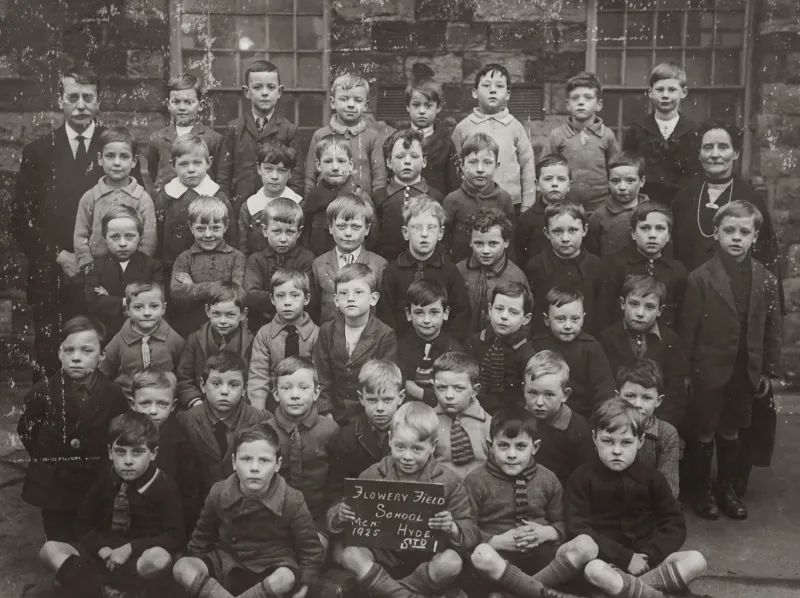
Archive photographs from local school collections often show the same details: deep white sinks, wooden drying racks, a gas copper, a mangle bolted to a bench, and rows of irons lined up like small metal boats. The windows are usually steamed up. The pupils are usually in aprons. The teacher is usually holding something up for inspection.
What a School Laundry Room Looked Like
A domestic science room was not a cosy kitchen. It was a teaching space with rules. Benches were scrubbed. Equipment was counted back in. Pupils worked in pairs or small groups, and the lesson had stages: prepare, wash, rinse, blue, starch, dry, iron, fold, put away.
Laundry notebooks from the period often include recipes and routines. A pupil might copy down how much soda to add to hard water, how to make starch for a shirt collar, or how to air a blanket without shrinking it. The language is plain and practical: “rub gently,” “rinse twice,” “do not wring woollens.” There are marks for neatness, and sometimes comments about carelessness.
The dolly blue bag turns up again and again in memories of washday. It was a small cloth bag of blue powder or liquid that was squeezed in the final rinse. Older Rotherham residents often remember being told not to burst it, or being fascinated by the way it turned the water a startling blue before the clothes came out looking cleaner and brighter. In school, it became a lesson in chemistry as much as housework — an example of how a little of something could change a whole tub.
Lessons Beyond Clean Collars
It is easy to smile at the idea of a laundry lesson. But these classes carried a serious message. For working families, keeping clothes clean and mended was part of staying respectable, staying healthy and making things last. Thrift was not a hobby. It was a household economy.
Domestic science also reflected the expectations of its time. In most schools, girls took the cookery and laundry lessons while boys went to woodwork or metalwork. The practical rooms were separate worlds, and the timetable quietly taught that housework belonged to women. That is not the whole story — some schools offered broader courses, and later decades saw changes — but the old pattern is visible in photographs, room plans and lists of equipment.
Oral histories from former pupils often capture both sides of this. Some remember the pride of learning to iron a shirt properly or make a bed with hospital corners. Others remember boredom, sore hands or the feeling that they were being prepared for a future they had not chosen. The archive does not settle that argument. It simply shows how ordinary schoolrooms became places where bigger questions about home, work and gender were played out in soapy water.
The Notebooks Left Behind
For anyone researching family or local history, laundry notebooks are underrated documents. They are small, cheap and often scribbled in, but they record the everyday technology of the home. They show what equipment pupils were expected to recognise, what words they used for it, and what standards they were asked to meet.
Look closely and you find regional habits too. A Rotherham notebook may mention a “poss stick” or a “dolly,” a “copper” or a “set pot,” or the correct way to peg sheets on a line in a back yard. These are the same words that appear in dialect recordings and oral history interviews. The schoolroom and the washhouse were not separate worlds; they shared a vocabulary.
Why the Washhouse Still Matters
Today, most of us load a machine and walk away. That makes the old domestic science rooms feel remote, almost theatrical. But they still have something to say about how skills are passed on, how households cope with limited money and space, and how schools decide what children need to know.
Rotherham Roots is keen to hear from readers who remember these lessons. Did your school have a domestic science room with a mangle in the corner? Did you learn to starch a collar, blue a sheet or iron a pleat? Do you still have a laundry notebook, a school apron or a photograph of a practical class? Those small memories are part of the town’s history, and they are worth recording before the steam finally clears from the windows.