One Good Coat and a Grammar School Place: Rotherham's Eleven-Plus Families Remembered

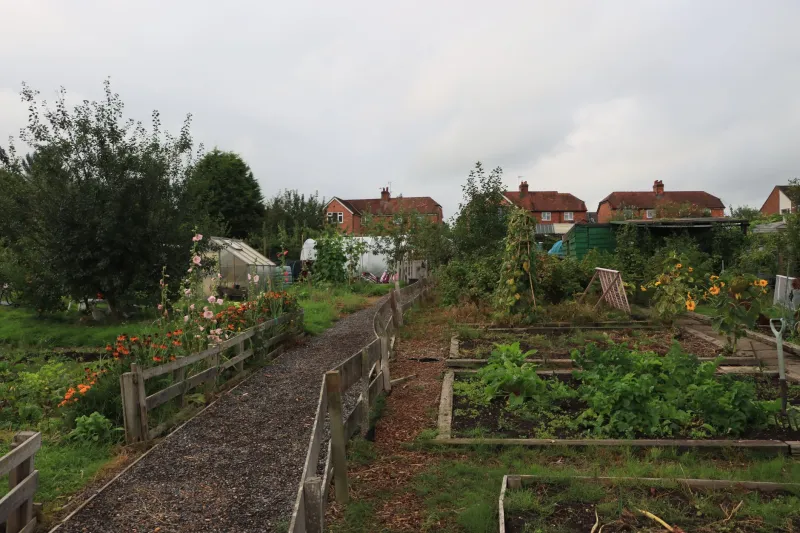
Photo: Bijay chaurasia, CC BY-SA 4.0, via Wikimedia Commons
There is a particular kind of silence in the archive. It sits in the gap between a name on a scholarship list and everything that name had to arrange before the first bell of the autumn term.
You can find those lists easily enough. Bound volumes of school board minutes, later handed over to the education committee, record the annual round of free places and special places at Rotherham's grammar schools — the town's own foundation, and the grammar schools out at Wath, Mexborough and Swinton. A column of surnames, a column of primary schools, a column of marks. Eleven-year-olds reduced to arithmetic, then reinstated as people by the letters their parents wrote asking whether the uniform grant might be paid early.
The envelope on the mat
For a family in Denaby, Thurnscoe or Goldthorpe, the eleven-plus result was rarely the hard part. The hard part was the week after.
A free place covered fees. It did not cover a blazer in the school colour, a tie, a cap, a satchel, a pair of proper shoes, games kit, or the small steady drip of bus fares that would run from September to July for the next five or seven years. Nor did it replace the wage a fourteen-year-old might otherwise have brought home.
In the oral history recordings held by Rotherham's local studies collection, the same phrase surfaces again and again, in different accents and different kitchens: we had to think about it. Not because the parents were unambitious — most were fiercely the opposite — but because ambition in a household on a colliery wage had to be costed.
The borrowed blazer economy
What the records show, and what the memories confirm, is a quiet network of borrowing that never appeared in any minute book.
Blazers went down the street from one scholarship child to the next, taken in at the seams or let out, the badge unpicked and resewn. Caps were handed on. A satchel did ten years' service and still had a pencil case in it from 1938. One woman, recorded in the 1990s, remembered her mother walking to a neighbouring village to collect a gymslip from a family whose daughter had left school at Easter — and coming back with a second one 'in case'.
The county's clothing grant existed, but it was means-tested, slow, and administered through forms that assumed a certain fluency with official language. Plenty of families simply didn't apply. Others applied and were refused, and that refusal is still remembered with a sharpness that surprises the interviewers.
Up before the pit hooter
The journeys themselves are their own chapter of local geography.
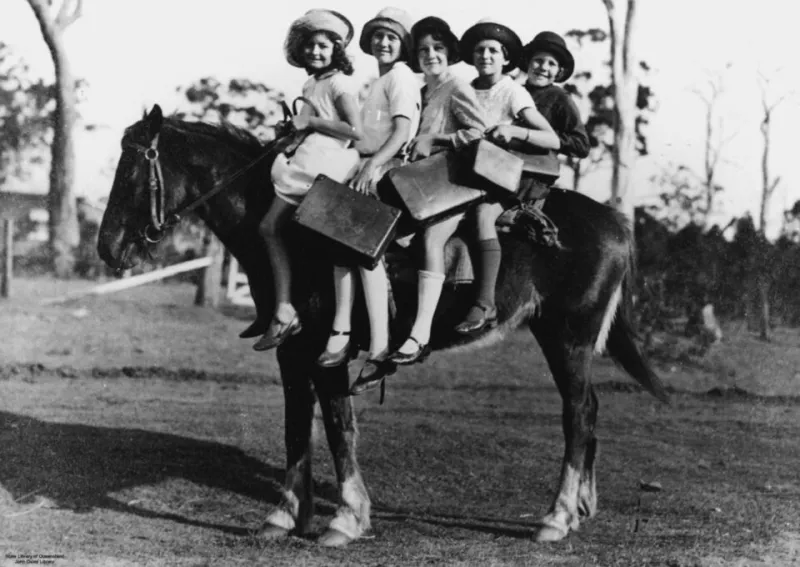
A child from Brampton or Kimberworth might walk twenty minutes to catch a bus into town. A child from a Dearne valley village faced something else entirely: an early works bus, a change at the bottom of a hill, and a walk at the other end that lengthened in winter. Because grammar school buses did not exist for everyone, some pupils arrived having already done a full day's travelling before assembly.
Look at a map of the period — the old tram routes gone, the trolleybuses still running in some boroughs, the villages stitched to the town by a handful of services — and you can see why 'getting the scholarship' and 'getting to school' were two separate achievements. Parents noticed. Mothers especially, in the recordings, talk about the weather rather than the Latin: the mornings when the bus didn't come, the afternoons when the last one went early.
Hic, haec, hoc — and homework by gaslight
In the classroom, the scholarship children were visible to themselves in a way they hadn't been at primary school. Some arrived with no French, no formal grammar, no idea what a 'prep' was. Many had come from two-teacher village schools where one teacher taught four year groups at once, and where the eleven-plus preparation amounted to a few months of practice papers squeezed in at the end of the day.
The homework was the shock. Latin declensions learned at a kitchen table under a gas mantle, or by the light of a single bulb hanging over the stairs. Older siblings drafted in to test spellings. Fathers, some of them, quietly baffled by an algebra exercise they had never met at school themselves — and quietly proud of it.
The scholarship boy or girl also carried a label around the village. Being 'the one who went to the grammar' was an honour and a small burden. You represented something. It was understood that you did not waste it.
What the logbooks leave out
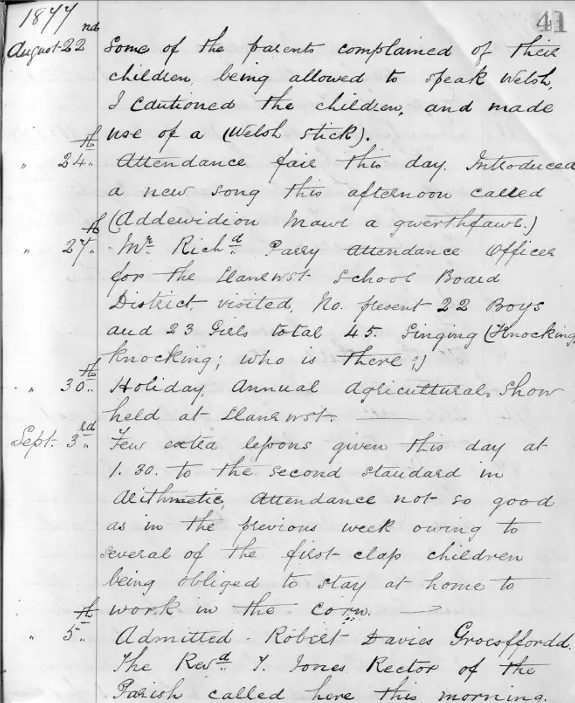
School logbooks are superb on snowfall, illness and attendance — the empty desk by the door, the week the bus didn't run, the measles outbreak that closed a class for a fortnight. They are much less forthcoming about class.
That's where the oral histories do the work the paper can't. Sit with a recording of someone describing the day they got the letter, and you hear not just pride but the negotiation that followed: which uncle might help with the blazer, whether the oldest sister could leave at fifteen so the youngest could stay on, what happened when a father said no and a mother said yes.
Those are the stories worth collecting while they can still be told. The registers give you the names. The people give you the price.
If you want to follow the trail
Start with the education committee minutes and scholarship registers in Rotherham's local studies collection, then read them alongside the admissions records of the individual grammar schools. Compare the list of free-place winners with the school's own entry book — the gap between the two tells you who accepted and, occasionally, who didn't.
And if you have a relative who made that journey in the 1940s, 50s or 60s, ask them what they wore and how they got there before you ask what they learned. The coat and the bus fare will tell you more about the town than any exam result ever could.