From 'Nesh' to 'Ginnel': Ten Rotherham Words Worth Saying Out Loud Again
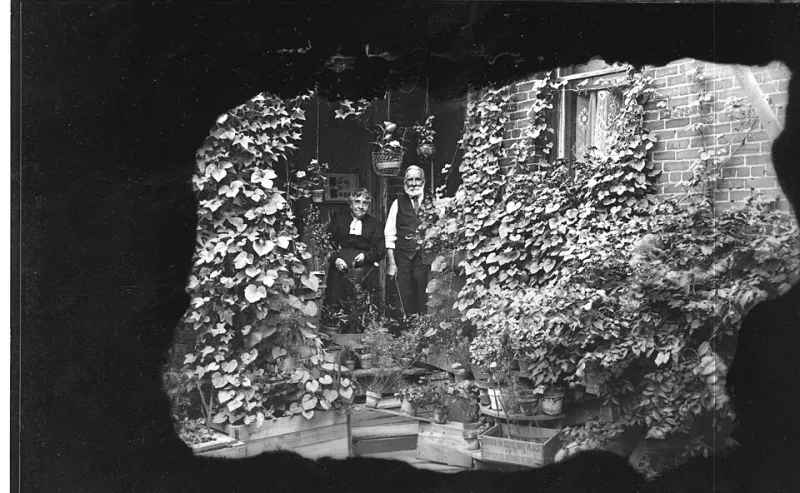
Photo: Unknown authorUnknown author circa 1900, CC0, via Wikimedia Commons
Dialect is not a museum piece. It is what happens when a town talks about the weather, the kids, the washing and the neighbour's dog. In Rotherham, community recordings and classroom dialect projects keep catching words that older residents use without thinking, while younger families sometimes hear them and ask: what does that mean?
Here are ten words worth keeping in circulation. They come from conversations, oral history sessions and the kind of phrases that still surface in shops, kitchens and back gardens. Each one includes a memory-style snippet and a family prompt. Use them as a starting point, not a rulebook: Rotherham speech has always borrowed, changed and argued with itself.
1. Nesh
Meaning: sensitive to cold; the sort of person who reaches for a coat in July. One contributor from Kimberworth remembered being called nesh for wearing a cardigan at a summer fete. Family prompt: ask an older relative what they were called when they complained about the cold.
2. Mardy
Meaning: sulky or moody. A Maltby-born resident recalled being told not to get mardy when a game was called off. It is a word with a raised eyebrow built in. Family prompt: collect three family words for being in a bad mood. Are any of them dialect?
3. Ginnel
Meaning: a narrow passage between buildings. In Rotherham, as across Yorkshire, ginnel is still understood even by people who mostly say alley. One contributor remembered a ginnel behind a row of shops as a shortcut and a place where you did not linger after dark. Family prompt: draw a map of your nearest ginnel or snicket and label where it leads.
4. Laik
Meaning: to play, or a game. A former Parkgate shop worker remembered children being told to go and laik outside. It is a friendly, old-fashioned word that still fits a playground. Family prompt: ask what games were played on your street or estate. Write down the rules in local words.
5. Bairn
Meaning: a child. It is common across the north and still turns up in Rotherham family stories. One contributor recalled a grandmother saying, 'the bairn will want her tea.' Family prompt: list the words your family uses for children, from babies to teenagers.
6. Summat
Meaning: something. As in, 'I'll get summat from t'shop.' A Masbrough resident remembered it as the word that filled gaps when the exact name of a thing escaped you. Family prompt: record a short conversation and count how many times someone says summat, owt or nowt.
7. Fettle
Meaning: condition or repair, as in 'in good fettle' or 'fettling about'. One contributor from Greasbrough remembered a shed being 'in a right fettle' before a clear-out. Family prompt: find an object at home that needs fettling. Describe its condition in three local words.
8. Mither
Meaning: to bother or fuss. A Wickersley resident recalled being told, 'Stop mithering me while I'm on t'phone.' It can be affectionate or exasperated, depending on the face that goes with it. Family prompt: ask for a family phrase that means stop bothering someone. Is it dialect, or just household slang?
9. Chunter
Meaning: to mutter or grumble quietly. One contributor remembered a grandfather chuntering about the weather while filling the kettle. It is the sound of mild complaint, not full argument. Family prompt: write down a sentence someone in your family says when they are chuntering.
10. Nithered
Meaning: freezing cold. A Clifton-born resident remembered coming in from the yard 'fair nithered' and standing by the oven. It is a word that does exactly what it says on the tin. Family prompt: collect your family's words for cold, hot, hungry and tired. Compare them with a neighbour's list.
Keep the conversation going
Rotherham's dialect is not one single voice. It shifts between neighbourhoods, generations and families, and it has been shaped by migration, work, school and media. That is why oral history matters: it catches the words people actually use, not the ones a dictionary thinks they should.
Families can start a small dialect archive at home with a notebook and a phone. Ask one question, listen without correcting, and write down the answer in the speaker's own words. Schools can do the same with a five-minute recording, a simple consent form and a wall display of local phrases. The aim is not to freeze the language. It is to notice it while it is still warm.
If you have a Rotherham word that deserves another outing, that is the best kind of heritage: say it, explain it and pass it on.