Steel, Shiftwork and School Runs: Rotherham's Women of the Forge Remembered

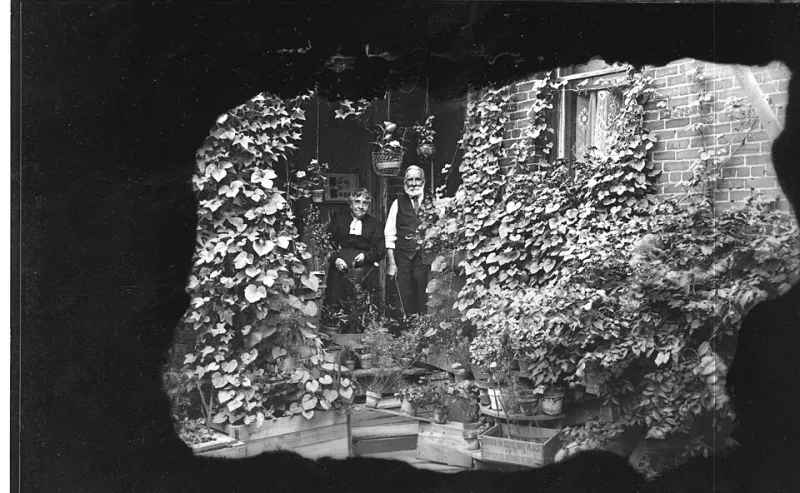
Photo: women steelworkers oral history archive Rotherham 1940s factory, via kimberlylawton.com
Ask anyone who grew up in Rotherham about the steelworks and you will usually get a sound before a story: the clang of the shift hooter, the rattle of trams, the shuffle of clogs on cobbles. But listen to the newly digitised oral history recordings held at Rotherham Archives and another soundtrack emerges. These are women's voices, often recorded in front rooms and community centres, describing lives shaped by the forge as much as the men's.
From front room to digital archive
The recordings were made over several decades, sometimes on cassette, sometimes on early digital recorders, and they have now been catalogued and digitised as part of the 2026 work to open up Rotherham's sound archive. They capture women who worked at Steel, Peech and Tozer, Park Gate, Brinsworth and smaller engineering firms across the Don Valley. Some were teenagers in the Second World War. Others started in the 1950s, 1960s or 1970s, when the works were still a major local employer and a family name on the school register.
One woman recalls: 'I started at fourteen in the canteen and I thought I'd died and gone to heaven because there was a proper sink and hot water.' Another remembers being moved onto a crane during the war: 'They put me up there and I was terrified. The gaffer said, tha'll be reight. I was reight. I never told him I cried in the lavvy.'
The humour is unmistakable. So is the matter-of-factness. These are not tales of heroism in the usual sense. They are accounts of getting on with it, learning a job quickly, keeping quiet when necessary and finding friendship in unlikely places.
'You didn't stand about'
During the Second World War, women were recruited into engineering and steel in large numbers as men left for the forces. After 1945 many were thanked and sent home, but labour shortages, changing household finances and the sheer range of work available brought others back. By the 1960s and 1970s, women in Rotherham's steelworks could be found in laboratories, inspection bays, wages offices, canteens, transport teams and on the shop floor.
The recordings do not gloss over the conditions. Women describe cold fingers, noise, oil, dirt and the constant sense of danger. 'You didn't stand about,' one contributor says. 'If you stood about, somebody found you a job, and it was never the job you wanted.' Another recalls the rule that you never walked through certain parts of the mill without someone who knew the way.
Safety is a recurring theme, often in the form of what was missing. Guards on machines, proper boots, ear protection and training were not always what they are today. The women's testimonies show how workplace change arrived slowly, sometimes through union pressure, sometimes through new regulations, sometimes because a near-miss frightened everyone enough to speak up.
Childcare, canteens and community
What emerges most strongly is the web of support that made shiftwork possible. Grandmothers, neighbours, aunties and older children all played a part. 'My mother had our two while I was on afternoons,' one woman says. 'You'd drop them off with a bag of jam butties and a clean pinny, and that was that.' Another remembers a rota of local mums: 'You'd shout over the wall and somebody would have them till your shift finished.'
The works canteen was another kind of community centre. Women ate together, swapped news and covered for each other when a child was ill. The canteen was also where new starters learned the unwritten rules: who to ask, who to avoid, how to get your overalls mended and where to hide on a quiet afternoon.
These stories complicate the usual picture of steel as a man's world. Women were not simply on the edges of it. They were in it, often doing essential work that was less visible than the furnaces but just as necessary.
What the tapes reveal about change
The recordings also document inequality. Women describe being paid less than men for similar work, being told to make tea while male colleagues were trained, and having to fight for promotion. Equal pay legislation in 1970 did not solve everything overnight, and the testimonies show how slow implementation could be.
At the same time, the tapes show pride. Women remember passing exams, running departments, training apprentices and being trusted with expensive equipment. 'I could read a micrometer before some of the lads could spell it,' one says. 'That didn't always get me the job, but it got me respect.'
For schools and families, these recordings are a reminder that local history is not only about buildings and machinery. It is about breakfast routines, bus fares, borrowed prams and the neighbour who had a key to the back door.
Bring your family's memories in
As of November 2026, Rotherham Archives and Local Studies is inviting families to add their own steelworks memories to the collection. You do not need a polished story or a famous surname. A photograph of a works outing, a wage slip, a union badge, a memory of a mother coming home smelling of oil, or a few sentences about a grandmother who worked in the canteen are all valuable.
If your mum, nan, aunt or neighbour worked in Rotherham's steel and engineering industries, consider getting in touch through Rotherham Roots or Rotherham Archives. The next generation of schoolchildren will learn from these voices, but only if we keep listening and keep collecting.