Clogs, Handbell, Coke Stove: Listening Back to a Rotherham School Morning
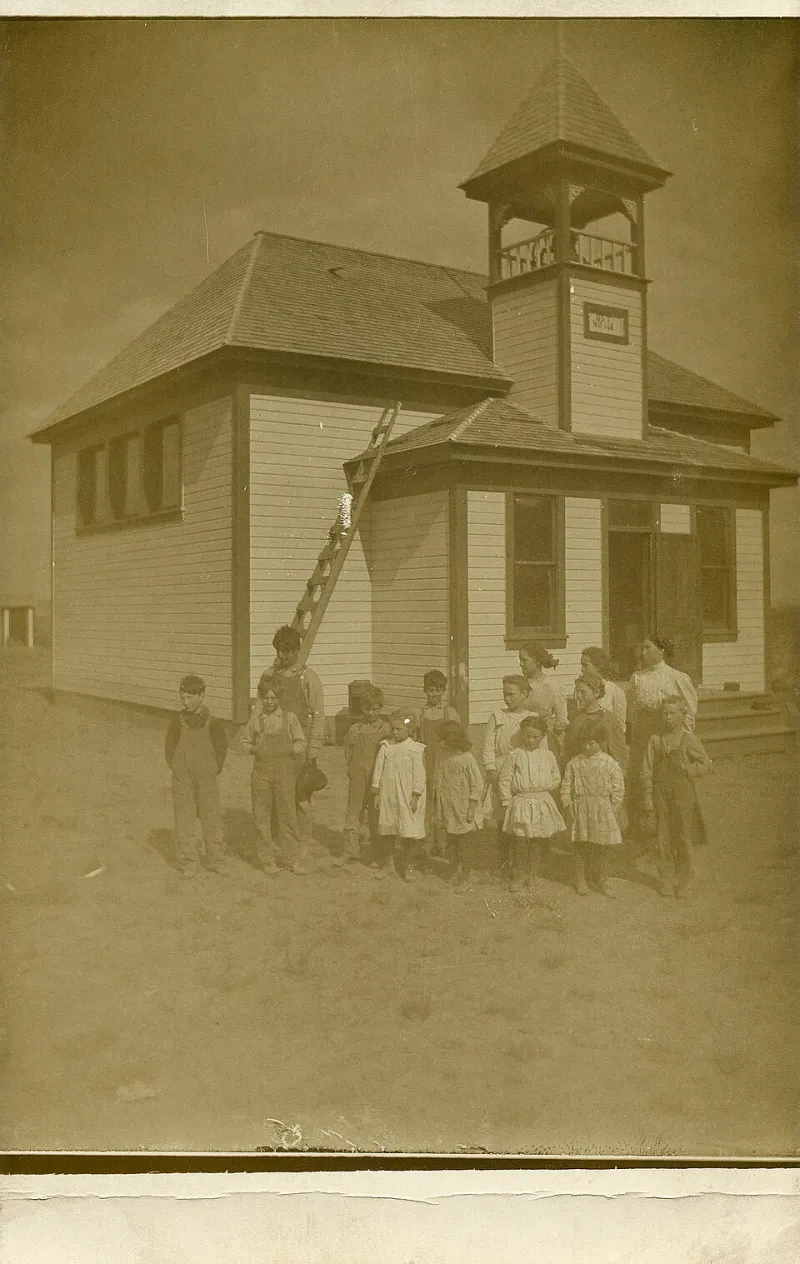
Photo: Steve Shook from Moscow, Idaho, USA, CC BY 2.0, via Wikimedia Commons
Every school morning used to have a soundtrack, and most of it has gone. Not just the buses outside the gates, but the school itself: iron on stone, brass in cold air, the wet squeak of a nib. Ask anyone who was at school in Rotherham before the 1970s to describe a morning and they will usually start with a picture. Ask again and they will give you a noise, often with a face attached to it — the caretaker, the ink monitor, the dinner lady banging a ladle on a trolley.
That is the trouble with sound. Photographs get donated to archives, catalogued in boxes and put behind glass. Sounds live in people's heads and go quiet when nobody asks. So this year we are asking.
Why the soundtrack matters as much as the photograph
Open a school logbook and you will find the weather, the absences, an inspection, a broken window. You will not find the clatter. Written records are good at events and bad at atmosphere, which is why oral history work in the borough has always leaned on the feeling of a place as much as its facts. A photograph of a corridor shows you the tiles. A memory of that corridor tells you how cold they were and how far the sound of clogs carried.
Below are seven sounds that turn up again and again in the interviews and letters we have been given. Some are already fading from living memory. All of them are worth recording before they go.
1. Clogs on corridor tiles
The oldest sound on the list, and the loudest. Iron-shod clogs on a hard floor made a hollow, ringing clatter that headteachers hated and children enjoyed. Logbooks from the early twentieth century regularly complain about noise in the corridors and about pupils running, which in a building with wooden floors and iron-shod feet amounts to the same problem.
One woman from Rawmarsh remembered being able to hear her brother coming from three rooms away. That is the detail we want, not the date the corridor was built.
2. The handbell at the door
Before bells were wired into the building, someone stood in the doorway and rang one. Usually the head, sometimes a monitor given the job as a small honour. In winter the sound was flat and short, swallowed by cold air; in summer it rang out across the yard and nobody moved until the third ring.
Ask around and you will hear about hands going numb holding the handle, and about the one teacher who rang it far too early.
3. The coke stove and the coal scuttle
The stove was the warm heart of a Victorian and Edwardian schoolroom, and it had its own repertoire: the clang of the scuttle, the scrape and riddle of the grate, the roar when it caught, the long silence when it sulked. Children sat in ranks according to how close they were to it.
Stove guards and fire drills appear in the records. What the records miss is the smell of damp coats drying on a rail behind it, which every interviewee mentions unprompted.
4. The ink monitor's round
A stone bottle of ink, an inkwell in every desk, and one child trusted to fill them. The sound of that job is surprisingly specific: the careful pour, the stopping of the bottle, the tick of a nib on wood if someone missed. Then, for the next half hour, the scratch and squeak of pen nibs across the page.
Handwriting lessons in Rotherham were drilled through the 1920s and 1930s, and the sound of forty nibs moving together is one of the most commonly remembered noises of all. If you have ever heard the phrase, quiet as a pen nib, this is where it came from.
5. Chalk, board and the wooden pointer
Chalk on a blackboard has a sound you feel in your teeth. Add the tap of a pointer under a word and you have the entire rhythm of a lesson: tap, pause, tap. Teachers who wrote across the whole board and then swept it away with a board rubber started a dust cloud that drifted to the back row.
Interactive whiteboards do not do this. Their silence is one of the quietest changes in a classroom.
6. Trolley wheels at twelve o'clock
Dinner hour announced itself: the squeak and rattle of a trolley in the corridor, plates stacked and clinking, cutlery dropped into a tray, a metal serving spoon against a metal counter. If the sound of a school morning has a crescendo, this is it.
Behind the noise was a whole system — dinner money collected on a Monday, tokens in some schools, and children who went home because there was nothing to pay with. That side of the story is told elsewhere in our archives. The trolley is the audible part.
7. The home-time whistle
Sharp, two notes, and the yard emptied. The whistle was usually the caretaker's or a deputy head's, and it was echoed down the years by whistle-blowers on the playground during games. Add the jangle of a key ring and the slam of a gate and you have the end of the day.
Send us the sound you remember
We are building a community audio list: short recordings, one to two minutes, of Rotherham people describing or imitating the noises of their school days. You do not need any kit beyond a phone. Tell us what it was, where it was, and roughly when, and if you can make the noise yourself, all the better.
Teachers, this works beautifully as a classroom task. Ask pupils to interview a grandparent, capture one sound, and write three sentences about it. The best go on the site.
Somewhere in a house in Rotherham there is a handbell in a cupboard. We would very much like to hear it.